
Banco de España Blog

Using a simple format and plain language, the Banco de España Blog seeks to make our work more accessible to the general public. It allows us to share our analysis of economic and financial issues and the ins and outs of the Banco de España’s tasks and activities with all those keen to learn more.

The Blog series group together posts covering certain similar topics. Further down is a general listing of all Blog posts, with a search function to help readers find the posts they are interested in.


Subscribe to the Blog

New Blog posts

Contact usOpens in new window

Send us your comments and suggestions

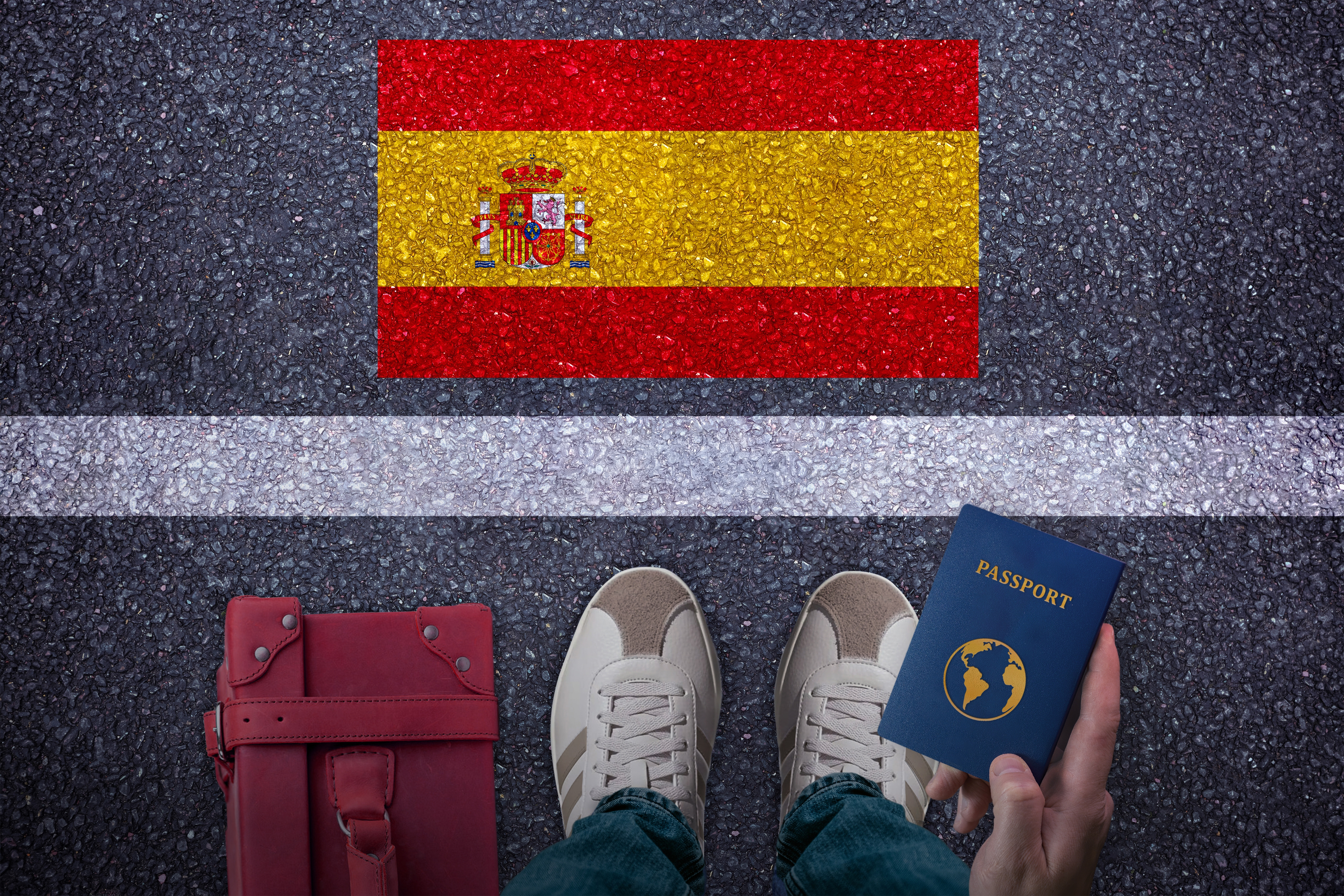
Financial inclusion of immigrants: the banking barrier for those in an irregular situation

26/05/2026 Soledad Núñez (Deputy Governor)

Financial inclusion is a key part of immigrants’ integration. Overall, there is no significant financial inclusion gap between immigrants and the Spanish-born population. The exception is immigrants in an irregular situation, for whom opening a bank account is often an insurmountable barrier, leaving them financially excluded.

Series

All blog posts

Filter

How to use the calendar: use the arrow keys to navigate the calendar. Press the arrows to navigate by days of the month. Press shift and the arrows to navigate by month. Press control and the arrows to navigate by year.

How to use the calendar: use the arrow keys to navigate the calendar. Press the arrows to navigate by days of the month. Press shift and the arrows to navigate by month. Press control and the arrows to navigate by year.

95 results found with the selected filters

07/03/2024

Why do gender gaps still exist at work? The latest Economics Nobel laureate has the answer Series: Focus. Research blog

Laura Hospido and Manuel Rojo

The gender gap in the labour market closed considerably during the 19th and 20th centuries. However, this process of convergence, both in labour market participation and wages, has slowed in the last two decades. Claudia Goldin’s research is key to understanding why.

Dados

27/02/2024

What does a shrinking central bank balance sheet mean for your pocket?

Galo Nuño

The balance sheets of the European Central Bank (ECB) and the other euro area central banks have been shrinking since 2022 due to the phasing out of the past decade’s expansionary monetary policy measures. This has an impact on interest rates in the economy and therefore affects everyone directly.

Subhome_Cubos

21/02/2024

Independent evaluations: a tool for transparency, improvement and modernisation

María Gutiérrez de Ojesto and Álvaro Moreno

The Banco de España is conducting independent evaluations of its functions and activities through its Evaluation and Strategic Planning Office. This initiative places us at the vanguard of central banking in key aspects such as continuous improvement and transparency.

BELab convenio acceso datos

19/02/2024

Researcher access to public institutions’ micro data: a win-win scenario

Ana Esteban and Juan Peñalosa

Four years ago, the Banco de España opened its data laboratory BELab, to provide the research community with access to a wealth of micro data. We are now taking the next step to make a much broader range of data available to researchers through an ambitious agreement with other Spanish public institutions.

Subhome

31/01/2024

What does the Banco de España’s bottleneck index tell us about the economic impact of the tensions in the Red Sea? Series: Focus. Research blog

Francesca Viani

The Red Sea crisis is driving up global shipping costs. However, our bottleneck indicator suggests that, for the time being, the economic impact is limited compared with other previous episodes. In any event, developments must be closely monitored. Our daily bottleneck indicator enables us to track the situation in real time.

Essai Cantillon manuscrito biblioteca Banco de España

22/01/2024

A treasure in the Library: the manuscript of Cantillon’s Essai, the first modern economic treatise Series: Treasures of the Banco de España

Joaquín Selgas

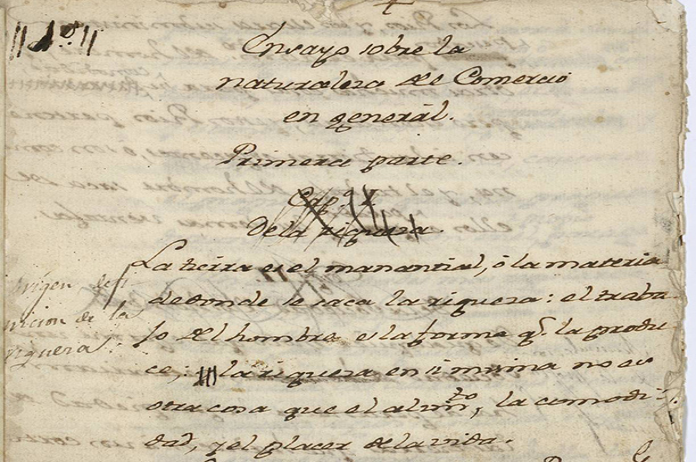
The Banco de España’s Library houses a late 18th-century manuscript of the first known Spanish translation of Richard Cantillon’s Essai sur la nature du commerce en général. This work is considered to be the cradle of modern economics.

9-suptech2_subhome_2

20/12/2023

Suptech: how innovative technology helps us supervise banks

Javier Tarancón and Pilar Puig

The Banco de España seeks to promote innovative technology. Incorporating suptech into supervisory activity is a top priority. One of the pillars of our strategy is to capitalise on our rich data sources using tools like artificial intelligence (AI).

8-huella-carbono4_listado-provisional

12/12/2023

Is reducing carbon emissions compatible with economic growth?

Marta Suárez-Varela

Squaring lower carbon emissions with growth requires energy efficiency to be improved and energy to be “decarbonised”. Headway on these fronts since the early 21st century has helped reduce emissions in Spain and Europe, but we must go much further if we are to achieve our climate targets.

Central de Balances

27/11/2023

40 years of quality statistics on Spanish firms

Manuel Ortega , Alfredo Maldonado and Carlos J. Pérez Castan

The Banco de España’s Central Balance Sheet Data Office was launched in 1983 to create and maintain highly detailed databases on Spanish firms. It has since become a benchmark for statistical information and research on the Spanish business sector thanks to the wealth and quality of its data.

06subhome

15/11/2023

The banking union: what is it and how does it benefit us?

Margarita Delgado

While incomplete, the banking union is already a reality and a key component of European integration. But what is it? Why does it matter? And how does it benefit us? The Deputy Governor answers these questions and looks at what still needs to be done.