Banknotes: where art meets technology
We handle banknotes all the time, yet we seldom pause to think about what lies behind – and within – them. In this episode we discover how today’s banknotes are designed, through a process that combines art, technology, science and even psychology to create something as familiar as it is indispensable. Because a banknote is not defined by its face value alone: it also stands for trust, identity, and much more besides.
"When someone holds a banknote, its design, colour technique, craftsmanship, quality of materials and security features all shape a sense of value that goes beyond the number printed on it.”
You can listen to this episode in other languages by choosing your preferred audio track in the YouTube settings. The dubbing is done automatically and has not been reviewed by the Banco de España.







How banknotes are designed: art, technology and trust in the money we use every day.
Without us even noticing, banknotes are part of our lives. They change hands, travel with us, find their way into pockets and wallets – yet we rarely pause to consider what lies behind them.
In this episode of the CIENxCIEN podcast, Ana Comellas takes us behind the scenes of a little-known process: the design of banknotes. A process in which art, technology and science come together, and which is now at a crucial point with the redesign of the future euro banknotes.
Designing a banknote today involves far more than simply drawing a motif. It requires balancing security, functionality, sustainability and visual appeal in an object we use every day. And to achieve this, more than one perspective is needed. As Beatriz García, Deputy Director of the Cash Department, points out, the process brings together very different profiles: “we work with multidisciplinary teams, with environmental, production, design and security experts.”
It is precisely this mix of disciplines that makes creating an object that is small and familiar, yet remarkably complex, possible.
Beneath that complexity lies an even more surprising dimension: how we perceive banknotes. Thanks to neurodesign, we can now analyse what part of the banknote we focus on, what catches our eye and what we feel when we handle them. Fernando León, Head of the Cash Technology and Innovation Division, explains how neuroscience “allows us to better understand what the public thinks and feels, and what captures their attention …”. Designing a banknote is also, in part, about shaping the experience of those who use it.
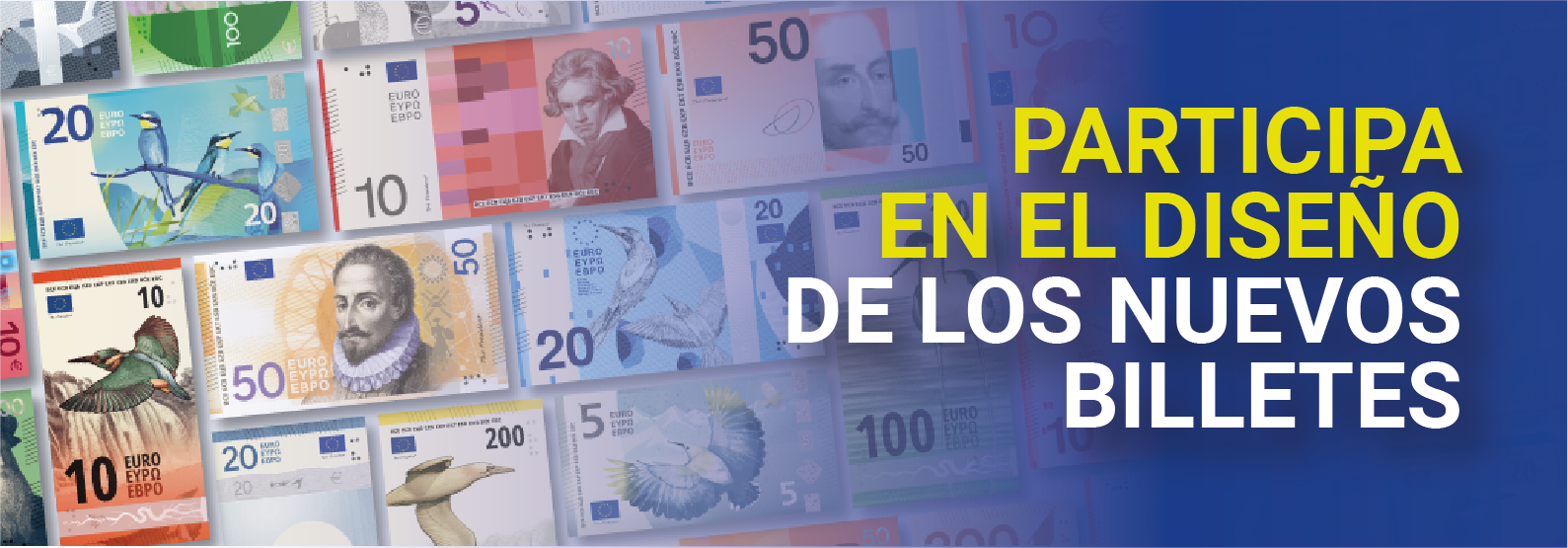
And now, for the first time, that design process is open to everyone. The euro banknote renewal process includes input from the general public, who will be able to choose between different proposals, transforming the redesign of an everyday object into a shared experience.
Juan Lupiáñez is Professor of Experimental Psychology and Cognitive Neuroscience at the Mind, Brain and Behavior Research Centre (CIMCYC) of the University of Granada. As an expert in the psychology of attention, he was part of the jury that selected the first round of new banknote designs. Although the use of banknotes has declined in recent years, he believes that “what matters is not so much how often a banknote is used, but what a banknote represents”, because a banknote is far more than a means of payment. It symbolises who we are, the values we share and the common project we are part of.
Ultimately, it is the result of a complex and invisible process: a consensus where art and technology converge to create the money we all use daily.