
The Banco de España opens its doors: a journey through the art and architecture of a time-honoured institution
The Banco de España is opening its doors to you if you are keen to explore the history, architecture and art collection of this institution dating back more than 200 years. Join us for guided tours of the building.
Starting this October, the Banco de España is offering the public a unique opportunity to visit its historic Cibeles headquarters, enter some of the most iconic areas in the building and enjoy a handpicked selection of its prized art collection. For the next nine months, seven days a week, visitors will be able to enjoy free guided tours. They will get a glimpse of the cultural heritage safeguarded by the Bank, a preview of what visitors will be able to explore in greater depth once the Banco de España Museum opens.
A building steeped in history
The Banco de España’s headquarters, inaugurated in 1891, is one of the leading examples of Spanish eclectic architecture . Designed by Eduardo de Adaro and Severiano Sainz de la Lastra, the building blends industrial and palatial elements with a timeless elegance. In 1999 it was given cultural heritage site status as a historic monument.
Some of the highlights open to visitors are:
- The Imperial Staircase, made of Carrara marble, this grand staircase is crowned by a spectacular symbolist stained glass window, designed by the Mayer firm of Munich and featuring allegorical figures of the goddess Fortuna, the Three Graces and the Fates. Why “imperial”?
- The Salón de Cobradores, recently restored by Paredes Pedrosa Arquitectos, has regained its original neo-Arabic architecture, complete with horseshoe arches and tiles inspired by the Alhambra.
- The Library, housed in the former Patio de Efectivo, is one of the building’s most distinctive spaces. Its iron-and-glass structure, designed by architect Eduardo de Adaro and built by the Fábrica de Mieres, transforms the room into a kind of internal lantern, where natural light pours through a stained-glass ceiling and gently illuminates all three levels.
Gallery 1 ‹expanded view: click on thumbnails›
19th CENTURY, ORIGINAL BUILDING
SOURCE: Banco de España
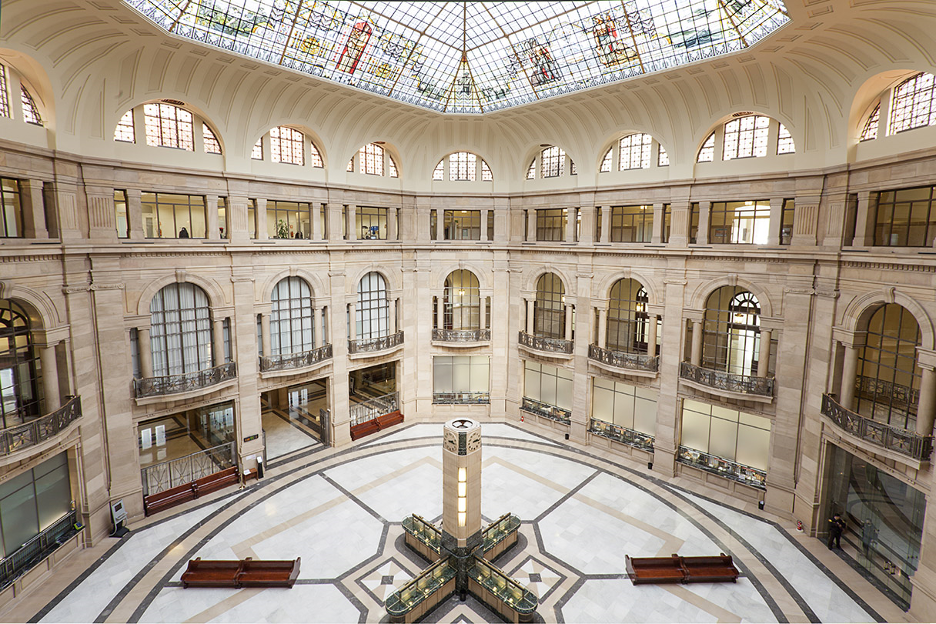
- The Patio de Operaciones, added during the 1930s extension by José Yárnoz Larrosa (Picture 1) reflects the Art Deco style of the period. Its standout feature is the large stained-glass window created by the Maumejean firm, which pays tribute to human endeavour and progress.
Picture 1
20th CENTURY, EXTENSION BUILDING. PATIO DE OPERACIONES
SOURCE: Banco de España
A collection reflecting history
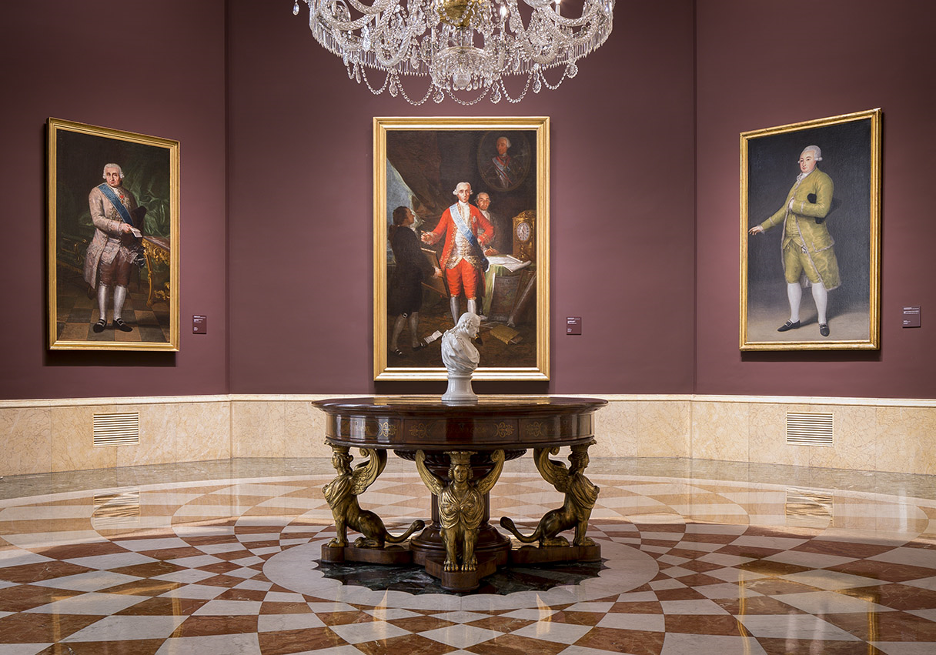
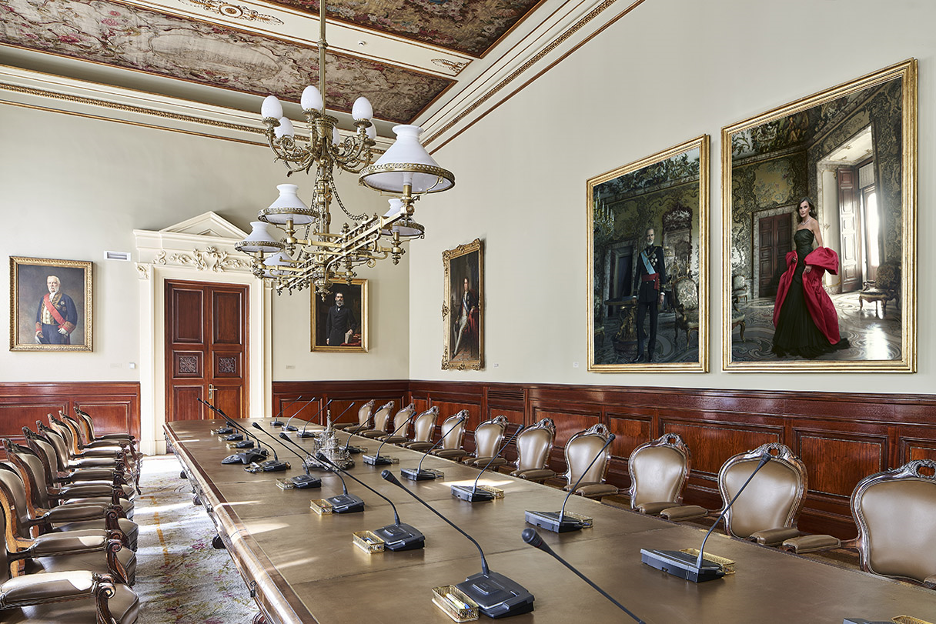
The Banco de España looks after more than the country’s gold reserve holdings, it also cares for one of the most remarkable art collections in Spain. During your visit, you will be able to enjoy a carefully curated selection of artworks on display in spaces such as the Goya Room (Picture 2) and the Governing Council’s Chamber (Picture 3).
Picture 2
GOYA IN THE BANCO DE ESPAÑA
SOURCE: Banco de España
One of the main attractions is the gallery of institutional portraits, spanning over 200 years, depicting governors, directors and heads of state. From the canvases of Francisco de Goya, commissioned by the Banco de San Carlos in the 18th century, to the photographs by Annie Leibovitz of King Felipe IV and Queen Letizia (Picture 3), the collection reflects the shift in representations of power and official portraits.
Picture 3
DISTINGUISHED PEOPLE IN THE GOVERNING COUNCIL’S CHAMBER
SOURCE: Banco de España
The Banco de España’s collection is constantly evolving in an ongoing dialogue between past and present
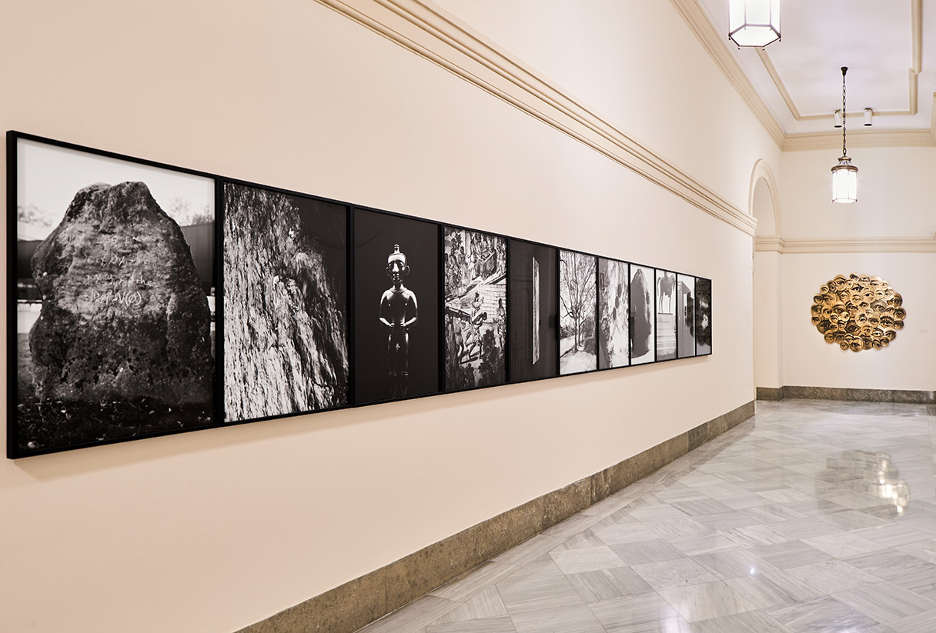
On your journey you’ll see some of the collection’s modern pieces (Picture 4), which show the Bank’s commitment to modern art. In fact, with more than 4,000 paintings, sculptures, photographs, drawings, engravings, tapestries and clocks, the Banco de España’s art collection is constantly expanding in an ongoing dialogue between past and present. This programme offers a glimpse into the collection, which will remain open to the public in the future.
Picture 4
SOME MODERN ARTWORKS
SOURCE: Banco de España
NOTE: Left wall. Photo series: Matter. Aleix Plademunt (2013-22).
Background: “Reflections in a Golden Eye. Carlos Aires (2018).
DID YOU KNOW ...?
The Open Doors programme offers three types of visits, all of which are free and grant access to the same areas:
- Open Doors at the weekend: Friday, Saturday and Sunday, morning and evening.
- School visits: Wednesday and Thursday evening, for students from secondary school to university level.
- Guided tours for everyone led by Banco de España volunteers: Monday and Tuesday evening, our employees (both retired and active) offer a fresh look at our headquarters.
And this is just the beginning!
As well as the Open Doors programme, the Banco de España has an exhibition space at the north-east corner of its headquarters to creatively and engagingly showcase unique pieces from its collection as well as themed or solo temporary exhibitions.
From 26 November, it will play host to “Allegories of a Future”, whisking transport visitors back to the 1930s, a decade of great change in Spain. Art Deco stained glass, artworks, furniture and little-known documents show how the Banco de España championed innovation and the value of work as drivers of change. The exhibition is a visual journey through the building’s extensions and decoration, portraying a country with dreams of the future.
Visiting the Banco de España is a chance to see how art and architecture can reveal a country’s economic history
This exhibition is just one of the stories that we will delve into in future blog entries on the Banco de España’s collection.
In essence, visiting the Banco de España is much more than stepping into a building; it’s a chance to see how much art and architecture can tell us about a country’s economic history and how new chapters are added to that story every day.

DISCLAIMER: The views expressed in this blog post are those of the author(s) and do not necessarily coincide with those of the Banco de España or the Eurosystem.