The European Central Bank (ECB), in collaboration with the national central banks, has updated the statistical indicators on climate change, incorporating methodological improvements, new data sources and a greater level of detail to strengthen the assessment of climate risks in the euro area’s financial sector. These improvements enable further progress to be made in the classification of these indicators, which are now classified as experimental, as they are considered to have reached a sufficient level of maturity and to provide useful results for economic analysis.
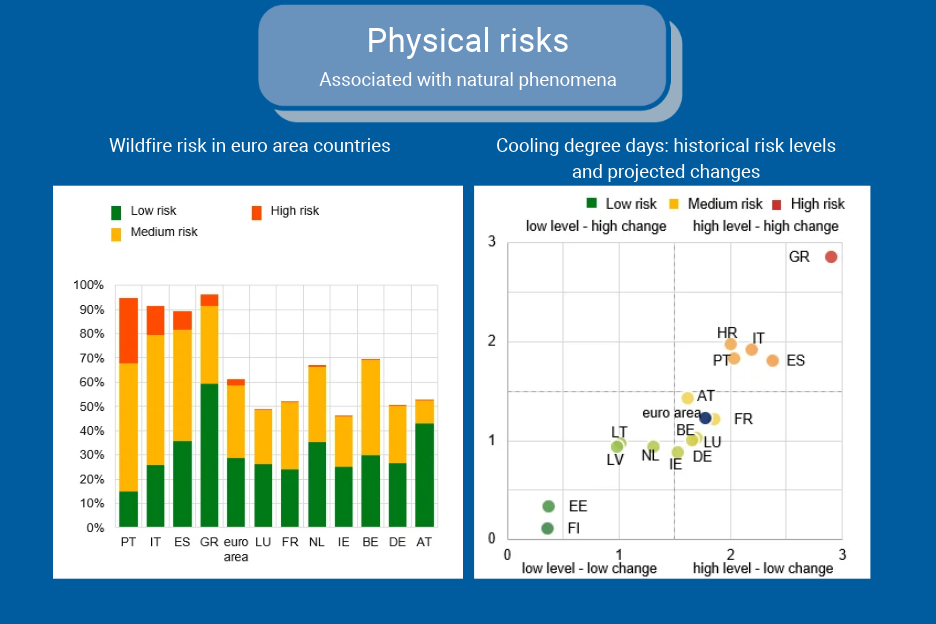
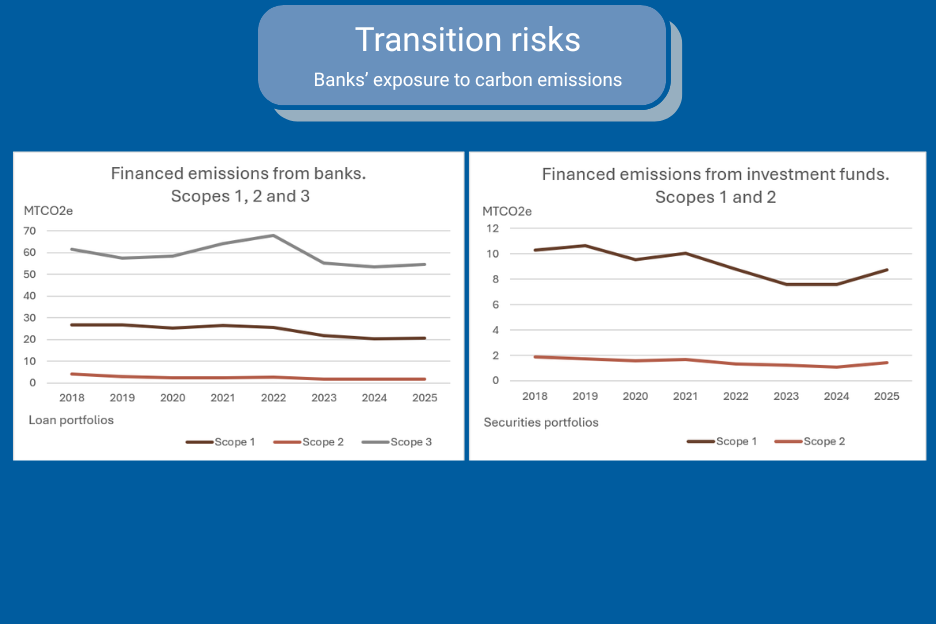
The new findings confirm a downward trend in financed emissions from the euro area’s financial sectors and expand the information available for assessing the physical risks associated with climate change. For example, between 2018 and 20251, direct emissions financed by bank loan portfolios fell by 36%, whilst those associated with investment fund securities portfolios fell by 34%. In turn, the new physical risk indicators allow for a more detailed analysis of exposure to rising temperatures and wildfires, the effects of which have a marked geographical dimension and a particular impact on certain economies in the southern euro area.

- 1 The figures for 2025 have been estimated using nowcasting techniques