
Advanced Search

About us

Financial Globalization: Shifting Balances

12 July 2010
Madrid

Information

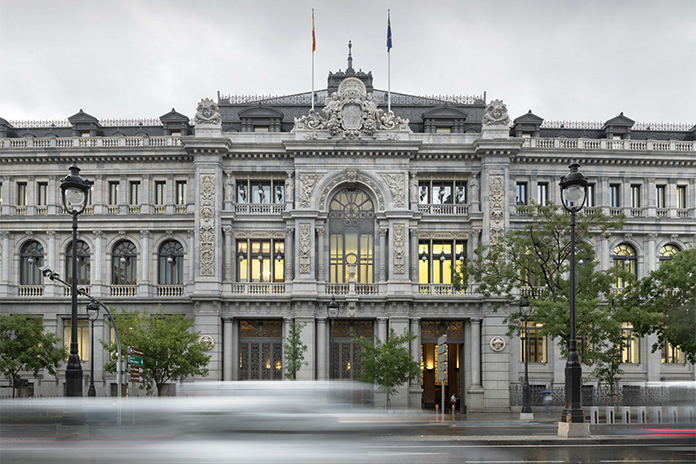
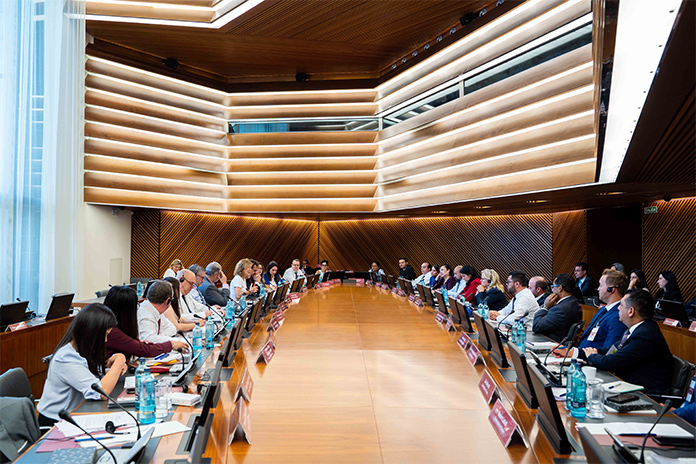
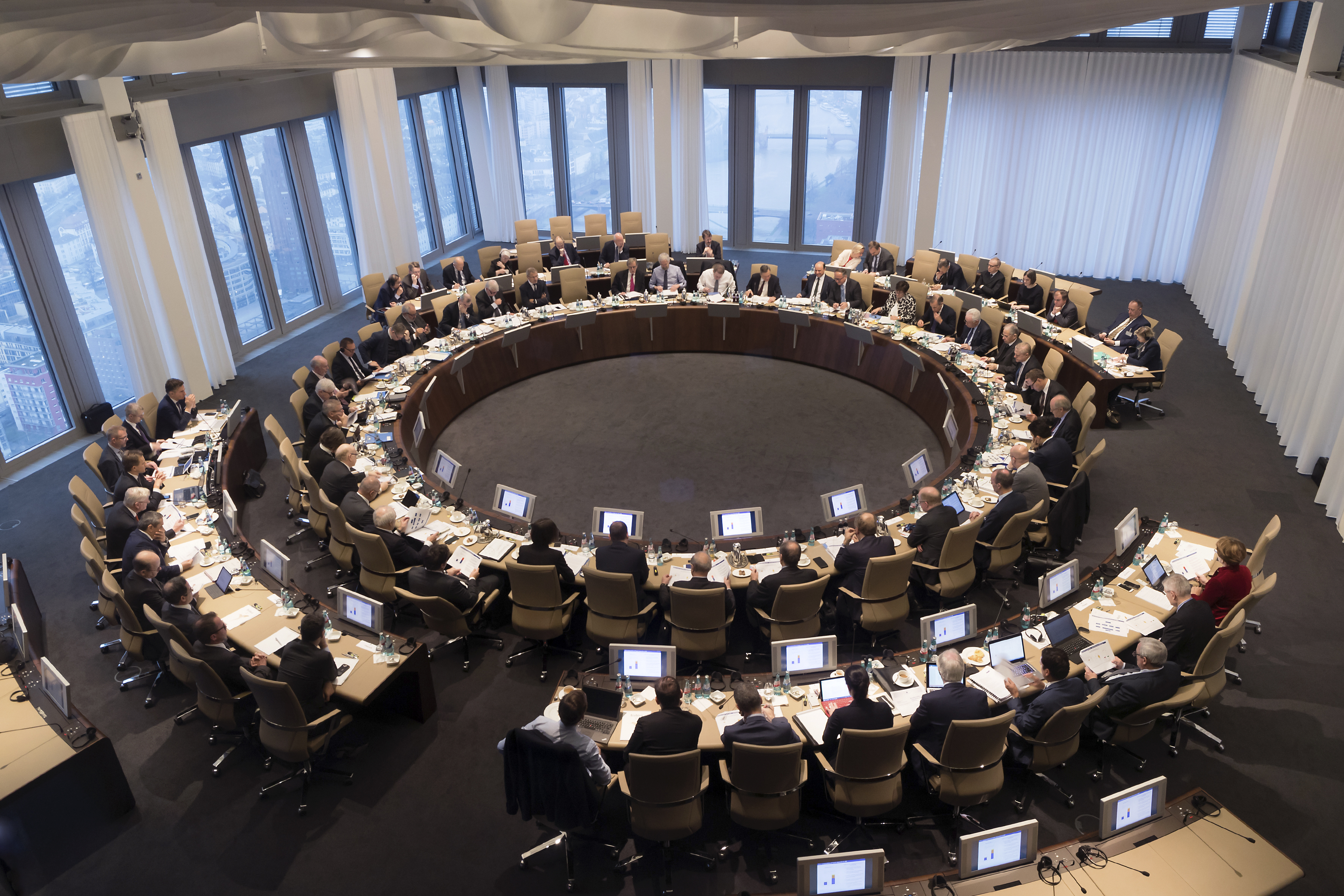
The conference of ‘Financial Globalization: Shifting Balances’, sponsored by Banco de España and the World Bank, with the academic support of CREI, took place at Banco de España, Madrid, on July 1st and 2nd, 2010- The goal of the conference has been to bring together academics and policy makers to discuss the links between the recent crisis and financial globalization, broadly focusing on two main themes:

  1. The two-way relationship between global imbalances and the crisis.
  2. The impact of the crisis on the process of financial globalization.

Among ideas arising during the conference we can highlight the following:

  • Empirical evidence suggests that financial crises can generate important increases in public debt and enhance the risk of a sovereign debt crisis. However, sovereign debt crises can also generate financial stability problems and affect credit.
  • The debate about the origin and implications of global imbalances is still open after the global financial and economic crisis:
    • Global imbalances could reflect growth patterns that are not sustainable in the medium term and that pose important risks.
    • Global imbalances could be the consequence of the lack of safe haven assets in emerging markets. This would explain the high foreign saving in these countries and the unexpected direction of international financial flows –from emerging to developed-.
  • The recent crisis has shown the importance of analyzing the international financial links, which are fundamental to understand the crisis transmission channels in an international context:
    • The increasing financial integration has implied a greater international shock transmission. In the recent crisis, capital shortages in global banks lead to cross-country deleveraging and large financial outflows.
    • During financial crises there is a simultaneous retrenchment of financial flows, both inflows and outflows.
    • The analysis of international financial links requires a study of the gross financial positions, and also at a bilateral level.
  • Currently, global imbalances are increasing again because part of the related structural problems has not been corrected. Also, the reserve accumulation by emerging economies is starting again after the crisis because it is considered to have important benefits. This policy poses both global and domestic risks.
  • The current international monetary system is asymmetric. The US plays a central role because of the main performance of the dollar as a safe haven asset. This is why, during stability periods, the US benefits from a high net return from its debtor position, while during crisis it behaves as insurance, generating "exorbitant" payments.
  • Real economic growth in emerging economies has become less dependent on advanced economies, partly due to the growing importance of China. However, financial covements have increased.
  • The development of the local currency debt markets, following the last decade trend, can increase the international financial system stability.
  • Latin America has resisted the global financial crisis. Currently, it faces the traditional risks associated with the financial flows entry and high growth. In this context, it is important to adopt contracyclical policies in line with the pragmatic and effective recent year’s response.
More information

Presentations

1 July 2010
Opening Remarks
14.00 - 14.15

 
Session 1: Financial Intermediation, Financial Globalization and the Crisis
14.15 - 15.45
Chair: Santiago Fernández de Lis (AFI)

“Sovereign default, domestic banks and financial institutions”
Nicola Gennaioli (CREI), Alberto Martin (CREI and UPF) and Stefano Rossi (Stockholm School of Economics)
        Paper  Enlace PDF: Abre en nueva ventana (571 KB)    
        PresentationEnlace PDF: Abre en nueva ventana (193 KB)

    Discussant: Hélène Rey (LBS)Enlace PDF: Abre en nueva ventana (367 KB)


“Financial globalization, financial crises and contagion”
Enrique Mendoza (University of Maryland and NBER) and Vincenzo Quadrini (University of Southern California)
       PaperEnlace PDF: Abre en nueva ventana (418 KB)
       PresentationEnlace PDF: Abre en nueva ventana (1 MB)

    Discussant: Fernando Broner (CREI and UPF)Enlace PDF: Abre en nueva ventana (51 KB)


Session 2: Decoupling, Recoupling and Synchronization
16.15 - 17.45
Chair: Pablo García (Central Bank of Chile)

“Financial regulation, financial globalization and synchronization of economic activity”
Sebnem Kalemli-Ozcan (University of Houston and NBER), José Luis Peydró (ECB) and Elias Papaioannos (Darmouth College and CEPR)
        PaperEnlace PDF: Abre en nueva ventana (477 KB)
        PresentationEnlace PDF: Abre en nueva ventana (565 KB)
    
    Discussant: Gabriel Pérez Quirós (Banco de España)Enlace PDF: Abre en nueva ventana (479 KB)

“Emerging economies in the 2000s: globalization, real decoupling and financial recoupling”
Eduardo Levy-Yeyati (Universidad Torcuato di Tella)
        PaperEnlace PDF: Abre en nueva ventana (499 KB)
        PresentationEnlace PDF: Abre en nueva ventana (494 KB)

    Discussant: Juan Ruiz (BBVA)Enlace PDF: Abre en nueva ventana (385 KB)


Keynote Speech
18.00 - 19.00
Chair: Javier Aríztegui (Deputy Governor, Banco de España)

"Global Imbalances"
Olivier Blanchard (Economic Counsellor and Director Research Department, IMF)
        PaperEnlace PDF: Abre en nueva ventana (178 KB)
        PresentationEnlace PDF: Abre en nueva ventana (3 MB)


2 July 2010
Session 3: Gross Capital Flows and Crises
08.30 - 10.00
Chair: Enrique Alberola (Banco de España)

“Financial crises and international portfolio dynamics”
Sergio Schmukler (The World Bank), Fernando Broner (CREI and UFP), Tatiana Didier (The World Bank) and Aitor Erce (Banco de España)       
        PaperEnlace PDF: Abre en nueva ventana (520 KB)
        PresentationEnlace PDF: Abre en nueva ventana (477 KB)

    Discussant: Philip Lane (Trinity College Dublin)Enlace PDF: Abre en nueva ventana (37 KB)


“Bilateral cross-border holdings, global imbalances: a view on the eve of the global financial crisis”
Gian Maria Milesi-Ferretti (IMF), Francesco Strobbe (ECB) and Natalia Tamirisa (IMF)     
        PaperEnlace PDF: Abre en nueva ventana (513 KB)
        PresentationEnlace PDF: Abre en nueva ventana (363 KB)

    Discussant: Francis Warnock (University of Virginia)Enlace PDF: Abre en nueva ventana (118 KB)


Session 4: Foreign Exchange Reserves
10.00 - 11.30
Chair: Olli-Pekka Lehmussaari (Bank of Finland)

“The demand for liquid assets and international capital flows”
Philippe Bacchetta (University of Lausanne) and Kenza Benhima (University of Lausanne)          
        PaperEnlace PDF: Abre en nueva ventana (178 KB)
        PresentationEnlace PDF: Abre en nueva ventana (259 KB)

    Discussant: Marcel Fratzscher (ECB)Enlace PDF: Abre en nueva ventana (301 KB)


"Country insurance and corporate risk-taking"
Hui Tong (IMF) and Shang-Jin Wei (Columbia University, NBER and CEPR)
        PaperEnlace PDF: Abre en nueva ventana (516 KB)
        PresentationEnlace PDF: Abre en nueva ventana (550 KB)

    Discussant: Kenza Benhima (University of Lausanne)Enlace PDF: Abre en nueva ventana (292 KB)


Session 5: Currency Denomination of Assets
12.00 - 13.30
Chair: Tito Cordella (The World Bank)

“Investing in local currency bond markets”
Francis E. Warnock (University of Virginia), Veronica Cacdac Warnock (University of Virginia) and John D. Burger (Loyola University of Maryland)     
        PaperEnlace PDF: Abre en nueva ventana (296 KB)
        PresentationEnlace PDF: Abre en nueva ventana (176 KB)

    Discussant: Romain Rancière (PSE)Enlace PDF: Abre en nueva ventana (180 KB)

“Exorbitant privilege and exorbitant duty”
Pierre-Olivier Gourinchas (Berkeley), Nicolas Govillot (Polytechnique) and Hélène Rey (LBS)
        PaperEnlace PDF: Abre en nueva ventana (611 KB)
        PresentationEnlace PDF: Abre en nueva ventana (357 KB)  

    Discussant: César Calderón (The World Bank)Enlace PDF: Abre en nueva ventana (499 KB)


Panel: Shifting Balances in Latin America?
14.30 - 15.45
Chair: Pilar L´Hotellerie-Fallois (Banco de España)

Carmen Reinhart (University of Maryland)Enlace PDF: Abre en nueva ventana (427 KB) Augusto de la Torre (The World Bank)Enlace PDF: Abre en nueva ventana (1 MB) and Rodrigo Valdés (IMF)Enlace PDF: Abre en nueva ventana (596 KB)


15.45 - 15.55
Closing Remarks

Copyright 2010 Banco de España. All rights reserved